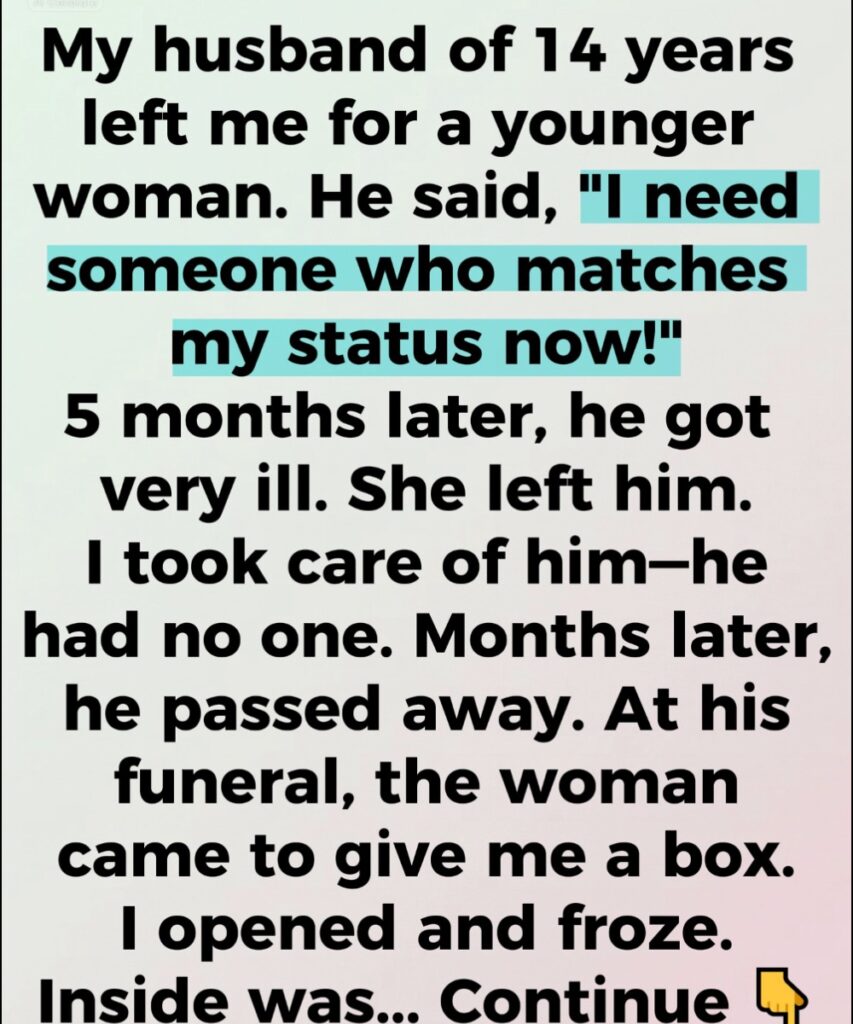
After fourteen years of marriage, my husband walked out of our home with a suitcase in one hand and a version of himself I barely recognized in the other. There had been no shouting match, no dramatic unraveling. Just a slow shift I hadn’t wanted to see — new suits, longer hours, a sudden obsession with image and influence.
When he finally spoke the words out loud, they were almost calm.
“I’ve outgrown this,” he said, glancing around at the life we had built. “I need someone who fits where I’m headed.”
Someone younger. Someone shinier. Someone who made him feel important again.
In that moment, fourteen years collapsed into silence. The dinners, the holidays, the quiet jokes only we understood — all of it dismissed like outdated furniture.
He left that evening. Five months later, I received a phone call that felt like fate circling back. It was one of his former colleagues. His voice was hesitant, almost apologetic.
“He’s very sick,” he told me. “It happened fast.”
The younger woman? Gone.
The moment hospital visits replaced cocktail parties, she disappeared. The friends who once admired his ambition were nowhere to be found. The man who had said he deserved more was suddenly alone in a house that echoed too loudly.
I told myself I had no obligation to go back. He had made his choice.
But something deeper than pride pulled me there. Maybe it was muscle memory. Maybe it was love that hadn’t fully learned how to let go. Or maybe it was simply the knowledge that once, we had promised to stay — in sickness and in health — and I wasn’t built to break promises easily.
When I walked through the door again, the house smelled faintly of antiseptic and regret. He looked smaller in the bed, his confidence drained by illness. The arrogance that once filled a room had dissolved into quiet exhaustion.
There were moments when he tried to speak — lips parting, eyes searching mine — as if rehearsing apologies he could never quite deliver. I didn’t press him. Words felt unnecessary.
I cooked. I cleaned. I managed medications. I sat beside him through sleepless nights. Not because he deserved it. Not because I had forgotten the humiliation. But because I needed to know that I could still act from compassion instead of bitterness.
Nearly a year later, he passed quietly just before dawn. No dramatic last speech. No grand confession. Just a final breath that slipped into stillness.
I believed that was the end of it.
Until the day of the funeral.
She came.
I almost didn’t recognize her. The bright confidence she once wore like armor was gone. She stood at the edge of the room, subdued, holding a small wooden box against her chest.

When the service ended, she approached me without meeting my eyes.
See Next Page To continue reading