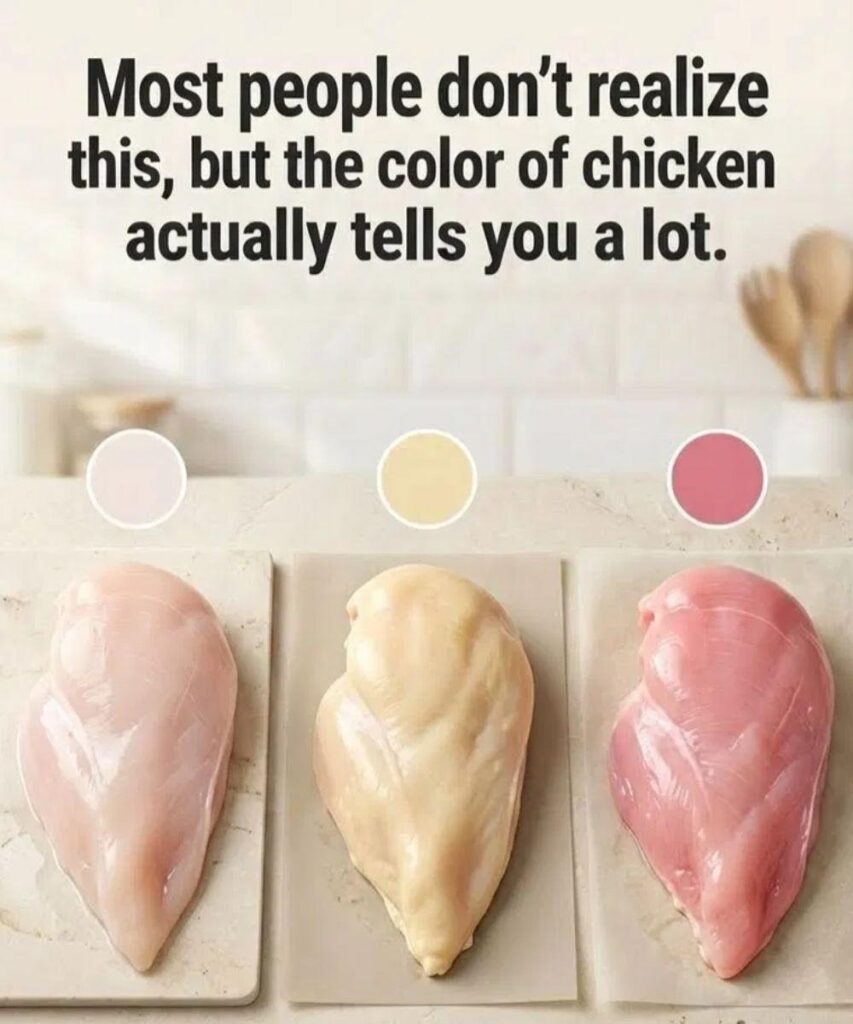
That pack of chicken in your shopping cart may be telling a story you haven’t fully noticed.
One tray looks pale — almost pinkish white. Another stands out with a rich yellow hue. Same cut. Similar price. Completely different appearance.
It’s natural to wonder:
Is one treated with additives?
Is the other more nutritious?
Or is color simply influencing your expectations before you even read the label?
Why Color Feels So Important
Humans instinctively judge food by appearance. Color signals freshness, flavor, and quality — or at least we believe it does.
But when it comes to chicken, color alone rarely provides a clear answer about quality or safety. Instead, it often reflects differences in diet, breed, and farming practices.
What Pale Chicken Usually Indicates
Paler chicken is commonly associated with large-scale commercial production.
In these systems:
-
Birds are bred for rapid growth
-
Diets are formulated for efficiency and weight gain
-
Chickens are typically raised indoors
-
Movement is limited to conserve energy
This model produces affordable chicken in large quantities — which explains why lighter-colored meat dominates supermarket shelves.
Important to note:
A pale color does not automatically mean the meat is unsafe or unhealthy. It simply reflects a production system focused on efficiency and consistency.
Why Some Chicken Is Yellow
A deeper yellow color usually comes from the bird’s diet.
Feeds rich in natural pigments — such as corn, marigold petals, or plants containing carotenoids — can give fat and skin a golden tone. Chickens that spend more time outdoors, consuming grass and insects, may also develop this coloration.
Slower-growing birds with more movement often produce:
-
Firmer texture
-
Slightly darker meat
-
More pronounced flavor
Many people describe it as tasting “more traditional.”
When Color Can Be Misleading
See Next Page To continue reading