
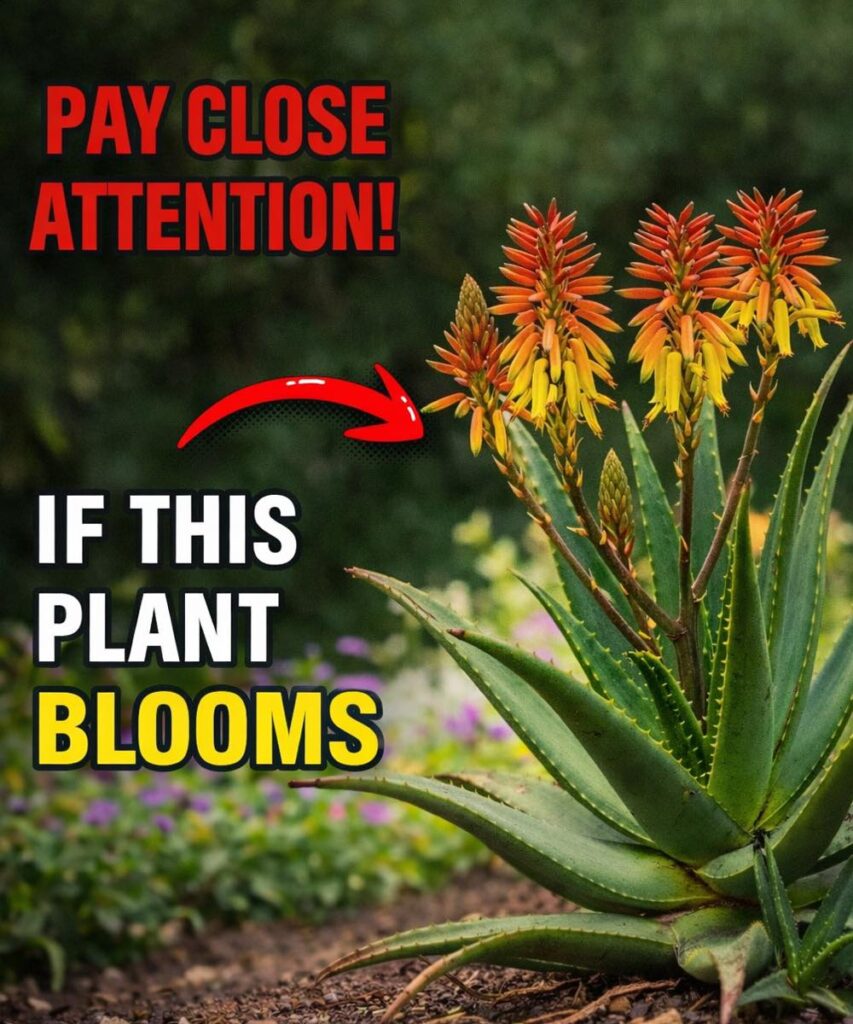
Seeing an aloe vera plant bloom at home can seem extraordinary. Many people have an aloe vera plant for years without ever seeing a single flower, so when a tall stalk with showy blooms finally appears, the inevitable question arises: why did it happen now?
The answer combines biology, environmental conditions, and cultural interpretations that, for centuries, have considered this flowering a special symbol.
The scientific explanation: a sign of maturity and balance
From a botanical perspective, aloe vera blooms when it reaches reproductive maturity and receives the right combination of environmental factors. It’s not a random event.
For an aloe vera plant to bloom normally, it needs:
A good amount of direct sunlight
Moderate watering without overwatering
Well-draining soil
Temperature fluctuations between day and night
A certain level of “positive stress”
This last concept, known as hormesis, indicates that some organisms react favorably to minor difficulties. In the case of aloe, situations such as a brief period of drought, roots that are tightly packed in the pot, or cooler nights can trigger its reproductive process.
In its natural habitat, in arid regions of Africa and the Arabian Peninsula, these changes occur frequently. That’s why it blooms much more there than indoors.
If it blooms in your home, it means that the conditions you’ve created are sufficiently similar to its natural environment.
What does the aloe flower look like and why does it have that shape?
When it blooms, the aloe produces a stem that can reach nearly a meter in height. On it appear clusters of tubular flowers that are yellow, orange, or reddish.
These flowers are not randomly designed. Their tubular shape facilitates pollination by birds like hummingbirds, which feed on the nectar.
This shows that the plant invests all the energy it has accumulated over years to ensure its reproduction and continued existence.
The traditional meaning of flowering
See Next Page To continue reading