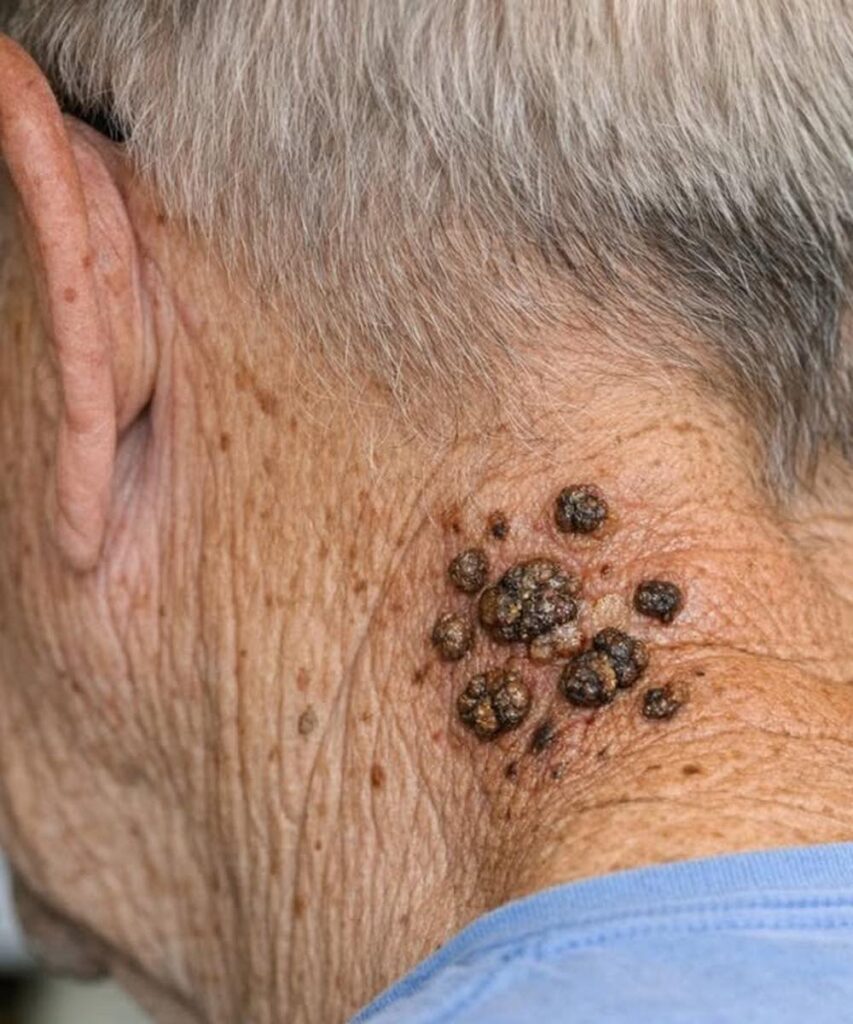
My grandpa has these dark waxy bumps on his neck that itch. What are they?
As people grow older, their skin often becomes a surface where different growths and spots appear. Although most of these changes are harmless, they can still cause worry because of how they look or because of symptoms like itching. One frequent type of growth seen in seniors is called seborrheic keratosis. These spots may show up suddenly or form gradually over time, prompting understandable concern about what they might be.
Learning what these skin changes represent and why they develop can make them easier to manage. This article explains the dark, waxy bumps your grandpa has on his neck—what they are, how they differ from more serious problems, and what can be done about them.
1. What Those Dark, Waxy Neck Bumps Most Likely Are
The dark, waxy spots on your grandpa’s neck are most likely seborrheic keratoses. These are benign (non-cancerous) skin growths that are extremely common in older adults. They usually appear brown, black, or light-colored and have a waxy, scaly, slightly raised look. Their size can range from a few millimeters to more than an inch (about 2.5 centimeters). While they can form anywhere on the body, they most often appear on the chest, back, scalp, and neck.
2. Classic Signs Of Seborrheic Keratosis You Can Spot At Home
Seborrheic keratoses have several recognizable traits. They often look waxy or as though they were “stuck on” the skin, similar to a bit of melted candle wax or modeling clay. These growths may appear alone or in clusters. They can be flat or raised and usually have a rough or textured surface. Their color ranges from pale tan to deep black. Sometimes they itch, especially if clothing rubs against them or if they are scratched.
3. How Seborrheic Keratoses Are Different From Skin Cancer
Although seborrheic keratoses can resemble certain skin cancers, including melanoma, important differences exist. Seborrheic keratoses typically have a consistent color and defined shape, while cancerous lesions often display uneven borders, multiple shades, and asymmetry. Even so, any noticeable change in a skin growth should be checked by a healthcare professional to rule out something more serious.
4. Why Your Grandpa’s Age And Skin Type Matter
Seborrheic keratosis is far more common in people over 50. This may be related to years of sun exposure and the natural aging of skin. Those with lighter skin tones may notice them more easily, though they can occur in any skin type. Recognizing that these growths are often a normal part of aging can help reduce unnecessary worry about their appearance.
5. Common Triggers: Sun, Genetics, And Irritation
See Next Page To continue reading