
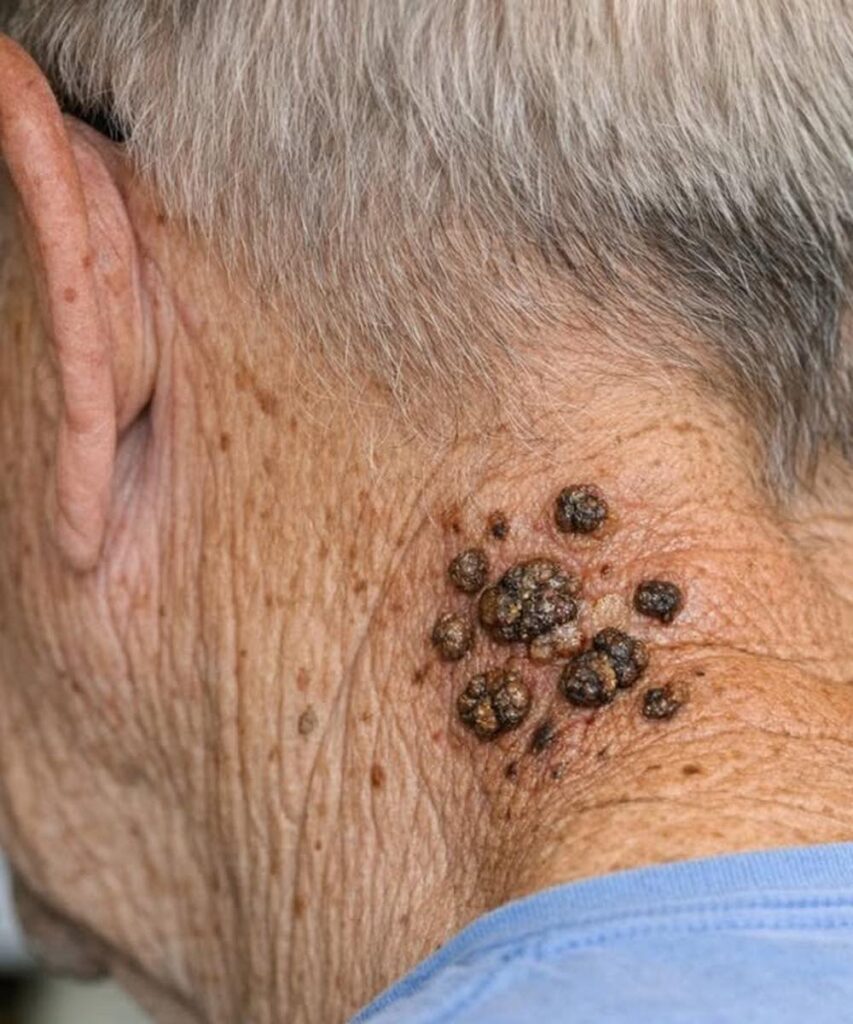
5. Common Triggers: Sun, Genetics, And Irritation
The exact cause of seborrheic keratoses is not fully understood, but several factors are thought to contribute. Long-term sun exposure likely plays a role, since they frequently appear in sun-exposed areas. Genetics is another key factor, as these growths often run in families. Friction or irritation from clothing may also increase itching or discomfort.
6. When Itching, Bleeding, Or Changes Are A Red Flag
Although usually harmless, seborrheic keratoses should be evaluated if they begin to itch intensely, bleed, or change in size, color, or shape. Such changes could signal a different skin condition that needs medical attention. Ongoing irritation or bleeding should not be ignored, as it may lead to infection or other issues.
7. How Dermatologists Confirm The Diagnosis
Doctors can often diagnose seborrheic keratosis simply by examining the growth. Dermatologists may use a dermatoscope—a handheld magnifying device—to view the lesion more closely. If the growth appears unusual, a biopsy may be performed. This involves removing a small piece of tissue for examination under a microscope to ensure it is not cancerous.
8. Treatment Options: From Freezing To Scraping To Lasers
Treatment is not always required unless the growth causes discomfort or cosmetic concerns. Common methods include cryotherapy, in which liquid nitrogen freezes the growth, or curettage, where it is gently scraped away. Laser treatments can also remove the lesion by vaporizing it. These procedures are generally quick and performed in a dermatologist’s office, with minimal downtime.
9. Home Care, What Not To Do, And When To Skip DIY Fixes
Despite many suggested home remedies, attempting to remove seborrheic keratoses yourself is not recommended. Picking, cutting, or scratching them can cause bleeding, irritation, or infection. Over-the-counter products may be ineffective or harmful. It’s best to consult a healthcare provider before trying any at-home treatment.
10. Helping An Older Relative Talk To Their Doctor About Skin Changes
Encouraging an older family member to speak with their doctor about skin changes is an important step. Before the appointment, make note of any new symptoms or visible changes, such as itching or bleeding. Offering to attend the visit can provide reassurance and help ensure all questions are addressed. Honest communication with medical professionals can lead to better care and greater peace of mind for everyone involved.