When Color Can Be Misleading
Here’s where things get interesting.
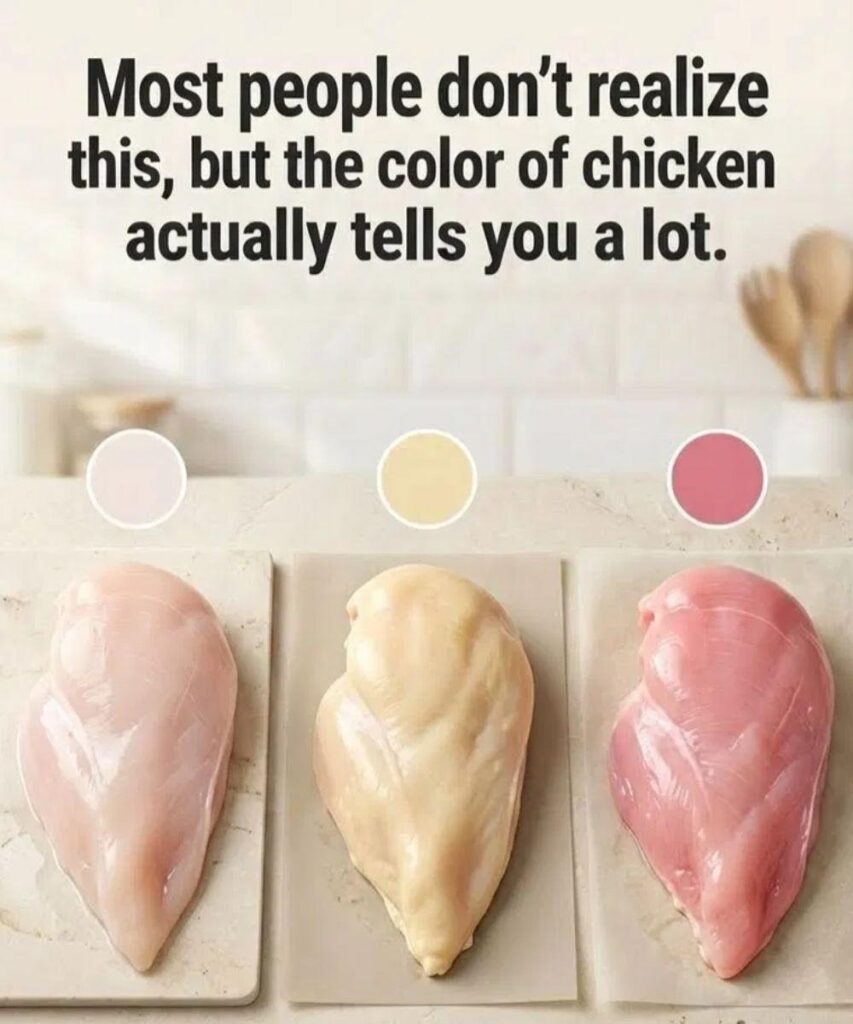
Some producers intentionally adjust feed to enhance yellow coloration because consumers associate that color with higher quality or more “natural” farming.
In those cases:
-
The bird may still be raised indoors
-
Living conditions may not differ significantly
-
The appearance may reflect marketing strategy rather than lifestyle
That’s why color alone isn’t a reliable indicator of welfare, nutrition, or flavor.
What Actually Matters
If you want better insight, look beyond appearance.
Labels such as:
-
Pasture-raised
-
Free-range
-
Organic
-
Certified humane
Provide more information about:
-
Living conditions
-
Feed standards
-
Antibiotic use
-
Animal welfare practices
Your senses also matter.
Fresh chicken should:
-
Smell clean and neutral
-
Feel firm to the touch
-
Have no sour or sulfur-like odor
Spoilage has nothing to do with whether the chicken is pale or yellow.
Once cooked, taste and texture become the true test — and those qualities are influenced more by how the bird was raised than by its raw color.
The Real Decision
There is no single “correct” color of chicken.
The better choice depends on:
-
Your values
-
Your budget
-
Your flavor preferences
-
Your priorities regarding animal welfare
Sometimes affordability matters most.
Sometimes flavor does.
Sometimes ethical considerations guide the purchase.
None of those priorities are written in shades of white or gold.
Final Thought
The meat aisle is full of quiet stories.
Color may catch your eye — but it’s only the opening line.
The rest of the story is found in the label, the sourcing, and the choices you decide to make.
If you’d like, I can also create:
-
A shorter consumer-focused version
-
A science-based breakdown of what affects poultry color
-
Or a comparison chart for common chicken labels