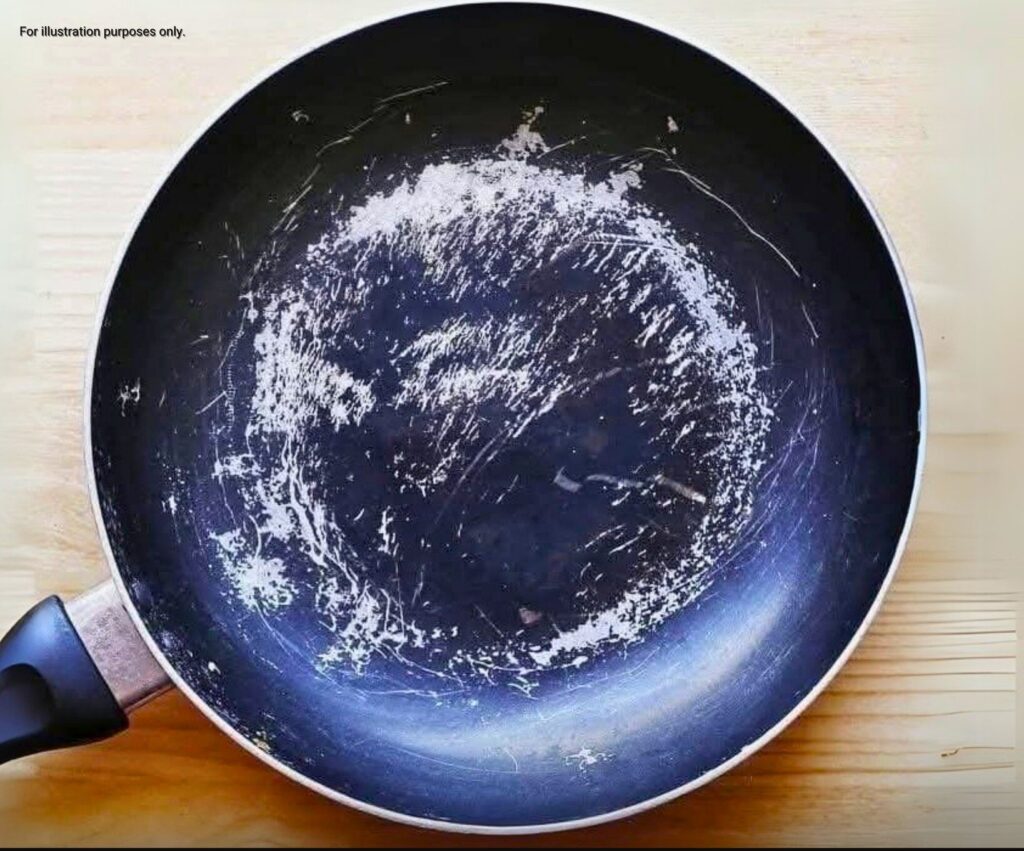
Microplastics—those tiny particles less than 5mm in size—have become one of the most pressing environmental concerns of our time. Found everywhere from ocean floors to our dinner plates, these particles stem from many surprising sources. And now, new research has revealed one more: your scratched nonstick pan.
Key Study Reveals: One Scratch Can Release 9,100 Microplastic Particles
A groundbreaking study by researchers at Flinders University and the University of Newcastle (published in Science of The Total Environment, Dec 2022) has shown that a single scratch on a Teflon-coated nonstick pan can release up to 9,100 microplastic particles.
Even more alarmingly, extensive damage could release up to 2.3 million particles during typical cooking. The particles are primarily polytetrafluoroethylene (PTFE)—a PFAS compound—which raises additional health concerns.
What Are Microplastics—and Why Do They Matter?
Microplastics can be either:
- Primary: Intentionally made small (like microbeads)
- Secondary: Created by the breakdown of larger plastics
They’ve been detected in:
- Seafood and drinking water
- Household dust
- Even human lungs and blood
Health risks include inflammation, hormonal disruption, and potential links to cancer—particularly for microplastics containing PFAS, known as “forever chemicals.”
Everyday Activities That Release Microplastics from Cookware
This study emphasizes how common kitchen behavior contributes to microplastic pollution:
- Using metal utensils on nonstick pans
- Scrubbing with abrasive sponges
- Washing scratched pans under running water
These actions cause tiny plastic particles to shed into food, water, and even the air in your home.
How the Study Was Conducted
Researchers simulated typical pan use and damage:
- They used controlled scratching and cooking-like conditions
- Raman imaging and spectroscopy detected and measured microplastic particles
- They analyzed damage ranging from a light scratch to total coating failure
This rigorous methodology provided clear proof of microplastic release from household cookware.
Other Products That Could Shed Microplastics
While the spotlight is on nonstick cookware, many everyday items could release microplastics:
- Plastic cutting boards
- Food containers
- Kitchen tools and utensils
- Personal care items like brushes and combs
Any plastic item that wears down with use could contribute to microplastic pollution.
What You Can Do: Safer Cooking Starts Here
If you spot a scratch on your nonstick pan, consider retiring it—especially for regular or high-heat use.
Practical Tips to Reduce Microplastic Exposure:
 Avoid metal utensils on nonstick pans
 Use wooden or silicone tools
- Wash pans gently with soft sponges
 Switch to stainless steel, ceramic, or cast iron cookware for long-term durability
 Replace old or damaged cookware
What About Manufacturers and Policy?
See Next Page To continue reading