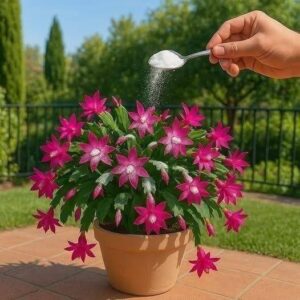
Many gardeners feel frustrated when their flowering plants produce lush green leaves — but no blooms.
When plants stop flowering, the cause is often one (or more) of the following:
-
Poor soil nutrition
-
Insufficient sunlight
-
Overwatering or underwatering
-
Incorrect pruning
-
Lack of key nutrients that support bud formation
Encouraging blooms isn’t about random feeding — it’s about giving plants the right nutrients at the right time. Two natural soil amendments often discussed for flowering support are bone meal and vegetable charcoal.
Let’s break down how they work — and how to use them properly.
Fertilizer #1: Bone Meal – A Phosphorus-Rich Bloom Supporter
Bone meal is an organic fertilizer made from finely ground animal bones. It’s widely available in garden centers and agricultural supply stores.
What It Actually Provides
Bone meal is primarily rich in phosphorus, with moderate calcium content. (It contains only small amounts of potassium.)
Phosphorus plays a key role in:
-
Root development
-
Flower bud formation
-
Energy transfer within the plant
-
Overall bloom production
If your soil is low in phosphorus, bone meal can support stronger flowering.
Important Note
Bone meal works best in:
-
Slightly acidic to neutral soils
-
Garden beds (less effective in alkaline soils)
It releases nutrients slowly, so it’s a long-term soil amendment rather than a quick fix.
Fertilizer #2: Vegetable Charcoal – Improving Soil Health
See Next Page To continue reading